Arriving at Lima Airport: Immigration, Security & Customs Guide
Arriving at Jorge Chávez International Airport
Arriving in Lima for the first time can be confusing. Many travelers wonder what happens after their plane lands, how long immigration takes, where customs happens, and when they will be able to meet their transportation. This guide explains the arrival process step-by-step.

Passport Control (Immigration) at Lima Airport
Passport Control is the first major step for most international travelers arriving at Jorge Chávez International Airport in Lima.
For many visitors, this is the first moment of uncertainty after landing. Understanding what happens next can make the arrival process much easier.
At passport control, you’ll encounter:
- Passport Control terminology: The airport may use terms such as Passport Control, Immigration, or Migraciones to describe this process.
- Immigration officers: Travelers who do not use automated processing or who require additional review will complete their entry process with an immigration officer.
- Biometric gates: Eligible travelers may be able to use automated immigration gates that use facial recognition technology to verify identity.
- Electronic passports: Automated processing requires a biometric passport containing the necessary electronic information.
- MigraCheck: Peru has introduced additional digital immigration services designed to modernize entry procedures for eligible citizens and residents.
These changes are designed to make immigration processing faster, but they can surprise travelers who are used to receiving a physical stamp or entry card.
Need a ride after immigration and customs?
Peru Entry Records: Digital Immigration Instead of TAM Forms and Passport Stamps
Travelers who have visited Peru in previous years may notice that the immigration process has changed.
In the past, visitors commonly received a TAM (Tarjeta Andina de Migración) and a passport stamp showing their entry date and authorized stay. Peru has transitioned toward a digital immigration process, and many travelers entering the country no longer receive a physical TAM form or passport stamp.
Your entry information is recorded electronically by Peruvian immigration authorities.
If you need to verify your entry record, permitted stay, or current immigration requirements, check the latest information from Peru’s immigration authority.
New Biometric E-Gates and Facial Recognition Technology
Jorge Chávez International Airport has introduced Automated Border Control (ABC) technology to modernize immigration processing and improve the arrival experience for eligible travelers.
The system uses biometric technology, including facial recognition, to compare a passenger’s identity with information stored in their electronic passport. This allows eligible travelers to complete immigration processing through automated gates instead of a traditional immigration counter.
How Do the Biometric Immigration Gates Work?
When using an automated gate, travelers typically:
Scan their electronic passport.
Allow the system to capture a facial image.
Complete identity verification through biometric matching.
Receive authorization to continue through the immigration process.
The technology helps immigration authorities process passengers more efficiently while maintaining security standards.
The system is part of Peru’s modernization of border control procedures at Lima Airport and replaces many older manual processes, including the need for traditional passport stamping for many travelers.
Who Can Use Automated Immigration Gates?
The Automated Border Control (ABC) e-gates at Jorge Chávez International Airport are designed to speed up immigration processing for eligible travelers. However, not every passenger can use them.
Eligibility depends on your nationality, residency status, travel direction, and travel documents.
Travelers Who May Use the E-Gates
The automated gates may be available for:
- Peruvian citizens arriving or departing Peru.
- Foreign residents of Peru with a valid Carné de Extranjería.
- Eligible foreign tourists departing Peru who meet the requirements.
Requirements for Automated Processing
To use the e-gates, travelers generally need:
- A biometric electronic passport (e-passport) with an embedded chip.
- To be 18 years or older.
- A valid travel document accepted by the system.
- Completion of any required digital registration process through Peru’s immigration system.
Travelers Who Must Use a Traditional Immigration Counter
You should use a staffed immigration lane if you:
- Are a tourist arriving in Peru for the first time or entering Peru.
- Are traveling with children under 18.
- Do not have a biometric passport.
- Do not meet the automated processing requirements.
- Need additional review by an immigration officer.

MigraCheck and Digital Immigration Services
Peru has introduced digital immigration services such as MigraCheck as part of the modernization of border control procedures at Jorge Chávez International Airport.
MigraCheck allows eligible travelers to complete certain immigration-related steps digitally before arriving at the airport, helping reduce processing times and supporting the use of automated immigration systems where available.
The service is primarily intended for eligible Peruvian citizens, residents, and travelers who meet the requirements for digital immigration processing.
Most international tourists arriving in Peru will continue through the standard immigration process unless they qualify for an automated service.
Customs After Immigration
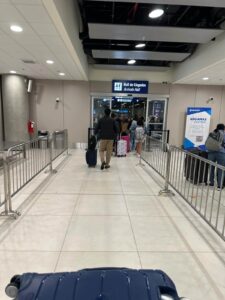
After completing Passport Control (Immigration) at Jorge Chávez International Airport, international travelers continue to baggage claim before proceeding through customs.
Many travelers use the word “customs” to describe the entire arrival process, but immigration and customs are separate steps. Immigration verifies your identity and permission to enter Peru, while customs deals with goods and items you are bringing into the country.
What Happens at Customs?
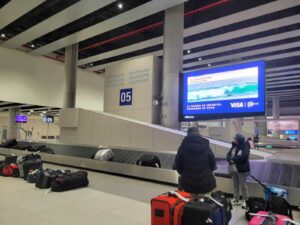
After collecting your luggage, passengers proceed toward the customs area before entering the public arrivals hall.
Most travelers arriving in Peru with normal personal belongings will complete this process quickly. However, passengers may need to make a declaration if they are carrying restricted items, commercial goods, or items that exceed permitted limits.
After Customs: Entering the Arrivals Area
Once you complete customs, you will exit into the public arrivals area of Lima Airport. This is where passengers meet family members, tour operators, hotel transportation, or their pre-arranged airport transfer.
If you have booked airport transportation, your driver will be waiting after you complete the arrival process and exit the secure area.
How Long Does It Take to Leave Lima Airport?
The time required to exit Jorge Chávez International Airport after an international arrival can vary depending on several factors, including the number of flights arriving at the same time, immigration queues, baggage delivery, and customs processing.
As a general expectation, travelers should allow approximately 45–60 minutes after landing to complete the arrival process during normal busy periods. However, some passengers may exit faster, while larger arrival waves can take longer.
Recent passenger flow measurements at the new Jorge Chávez terminal have shown that immigration wait times can increase significantly during busy periods, highlighting why travelers should allow extra time before scheduling transportation.
Your actual exit time begins after the aircraft reaches the gate. Landing time does not mean you are immediately ready to leave the airport.
The arrival process includes:
- Walking from the aircraft to immigration.
- Completing Passport Control.
- Waiting for and collecting checked luggage.
- Completing customs procedures.
- Exiting into the public arrivals area.
For airport transportation, it is best to schedule your pickup based on your flight arrival time, not the expected time you will walk outside the terminal.
Meeting Your Airport Transfer After Arrival
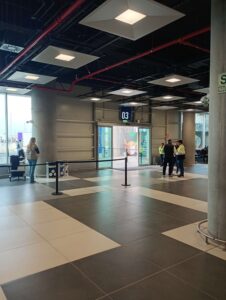
After completing immigration, collecting your luggage, and passing through customs, you will enter the public arrivals area of Jorge Chávez International Airport.
This is the meeting point for passengers who have arranged airport transportation.
For Gringo Taxis passengers, your driver will meet you at the designated airport pickup location near Exit 3. Depending on airport operating conditions and passenger flow management, your driver may be positioned immediately outside the terminal exit rather than inside the arrivals hall.
Do not leave the airport area or search for transportation elsewhere. Exit the terminal through the designated meeting point, where your driver will be waiting with your booking information.
Your driver will have the details from your reservation, including your name, flight information, and destination.